When evaluating children’s books it is important for
teachers to keep in mind that some English Language Learners might lack the
background knowledge necessary for understanding texts. This week I evaluated The True Story of the Three Little Pigs by Jon Scieszka and Dear
Mrs. LaRue Letters from Obedience School by Mark Teague. Each book was
evaluated for components that might affect comprehension.

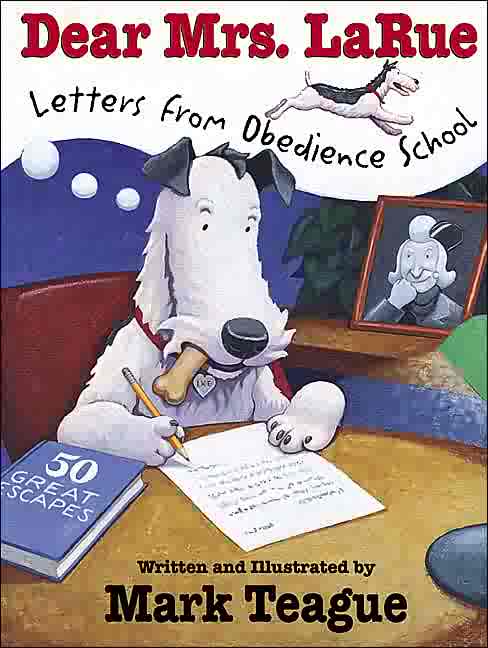
Dear
Mrs. LaRue Letters from Obedience School by Mark Teague
1. Difficulty: The
student might not understand the format of the book. English Language Learners may be confused
that it is not written in a typical story format. Also, they may not be familiar with written
correspondence.
Solution: The teacher can explain that this book is not written in the same format of a typical story. The teacher can show the students that even though the text is written using letters, it still tells a story.
Solution: The teacher can explain that this book is not written in the same format of a typical story. The teacher can show the students that even though the text is written using letters, it still tells a story.
2. Difficulty: English
language learners may not have background knowledge of obedience school or
prisons. They may struggle with the
concept of sending a dog off to an “academy”.
Solution: The teacher can pre-teach the concept of boarding schools. The teacher can explain the use of boarding schools as well as animal obedience schools.
Solution: The teacher can pre-teach the concept of boarding schools. The teacher can explain the use of boarding schools as well as animal obedience schools.
3. Difficulty: ELL
students may struggle to identify that Ike is exaggerating. Ike says one thing, but the pictures show
another.
Solution: Teachers can help English Language Learners see that Ike is being dramatic by pointing out the differences between the pictures and Ike’s letters. The use of visuals and the teacher thinking aloud will help students understand the differences. Furthermore, conversation with a partner about Ike’s letters and conditions would help develop language and understanding.
Solution: Teachers can help English Language Learners see that Ike is being dramatic by pointing out the differences between the pictures and Ike’s letters. The use of visuals and the teacher thinking aloud will help students understand the differences. Furthermore, conversation with a partner about Ike’s letters and conditions would help develop language and understanding.
4. Difficulty: Some ELL students may have difficulty separating the
real and imaginary elements of the story.
Solution: Help students see how the author blends behaviors or real dogs into an imaginary story. The teacher can help students separate the behavior of real dogs and make-believe dogs. This can be done with the use of a graphic organizer on the board that is filled out throughout and after the story. A teacher could also use a video to show typical dog behaviors.

Solution: Help students see how the author blends behaviors or real dogs into an imaginary story. The teacher can help students separate the behavior of real dogs and make-believe dogs. This can be done with the use of a graphic organizer on the board that is filled out throughout and after the story. A teacher could also use a video to show typical dog behaviors.
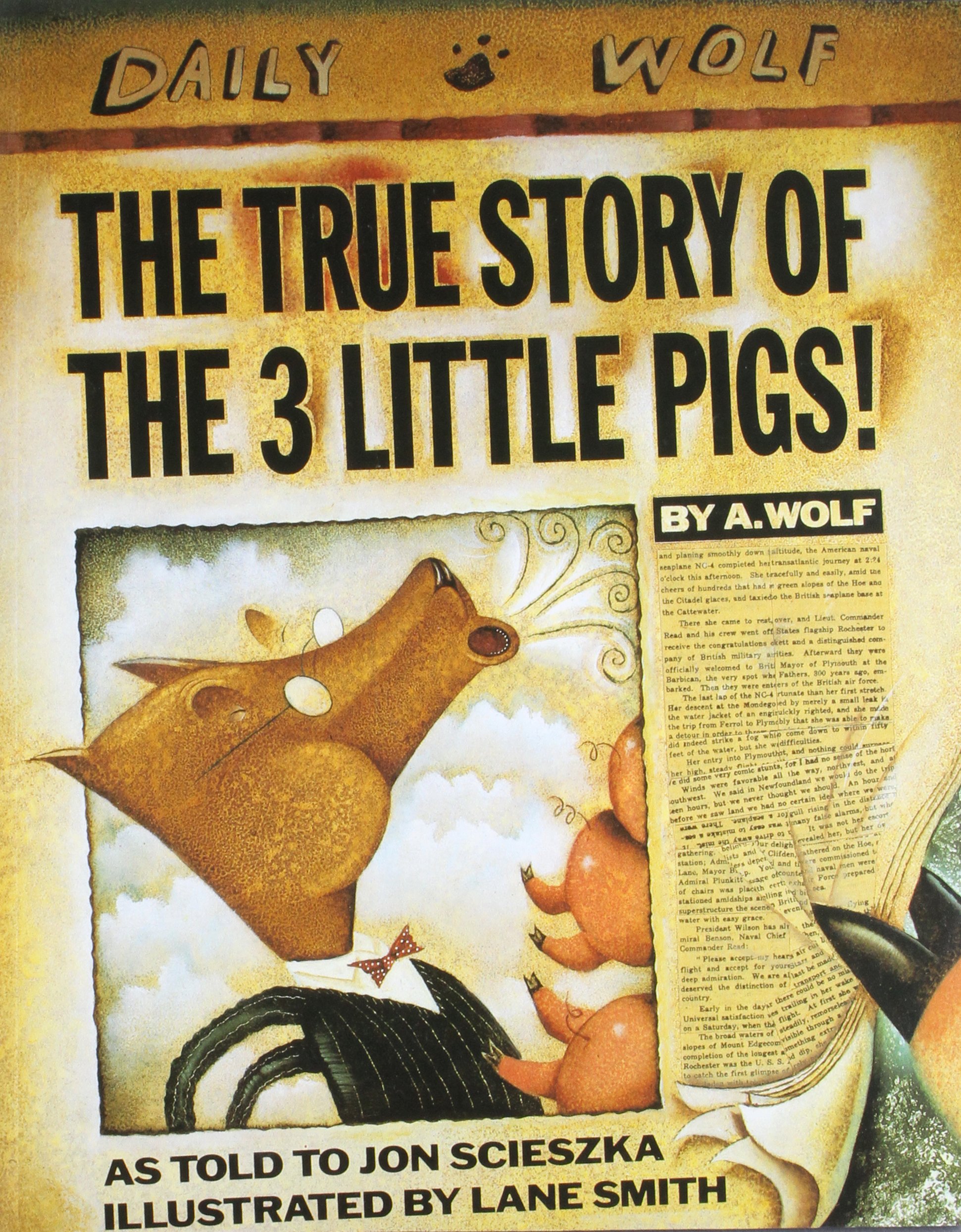
The
True Story of the Three Little Pigs by Jon
Scieszka
1. Difficulty:
If English Language Learners do not know the story of the three little pigs
then they will struggle to understand The
True Story of the Three Little Pigs or the significance of the story.
Solution: Teachers can be sure to give the opportunity to read the original The Three Little Pigs story before The True Story of the Three Little Pigs.
Solution: Teachers can be sure to give the opportunity to read the original The Three Little Pigs story before The True Story of the Three Little Pigs.
2. Difficulty:
English Language Learners might not understand the concept of a fractured fairy
tale.
Solution: After ensuring that all students have read the original The Three Little Pigs, teach students about fractured fairy tales. Teachers should be sure to explain that the changes in The True Story of the Three Little Pigs makes it a fractured fairy tale.
Solution: After ensuring that all students have read the original The Three Little Pigs, teach students about fractured fairy tales. Teachers should be sure to explain that the changes in The True Story of the Three Little Pigs makes it a fractured fairy tale.
3. Difficulty:
Students may understand some of the vocabulary and phrases used in the
story. Phrases: rude little porker, what
a pig, brains of the family, your old granny can sit on a pin, jazzed the story
up, the big bad wolf, once upon a time time, jazz it up, and second helping.
Words: framed, huffed, puffed,
cheeseburger, and spoil
Solution: Pre-teach these unfamiliar phrases using pictures and demonstrations prior to reading, and reiterate meanings as necessary during reading.
Solution: Pre-teach these unfamiliar phrases using pictures and demonstrations prior to reading, and reiterate meanings as necessary during reading.
4. Difficulty:
English Language Learners might not understand that straw and sticks are not good
building materials for a house.
Solution: A teacher could set up a mock demonstration showing the strength of straw and sticks. As an alternative, the teacher could have straw, sticks, and a brick to illustrate the differences between the building materials.
Solution: A teacher could set up a mock demonstration showing the strength of straw and sticks. As an alternative, the teacher could have straw, sticks, and a brick to illustrate the differences between the building materials.
References
Scieszka, J. (1989). The
true story of the 3 little pigs. New York, NY: Viking Kestrel.
Teague, M. (2002). Dear
Mrs. LaRue: Letters from obedience school. New York, NY: Scholastic Press.

No comments:
Post a Comment